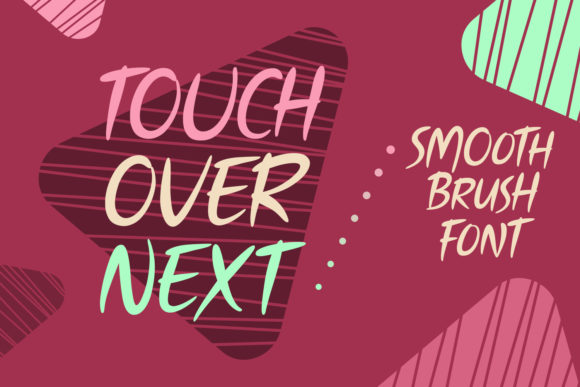
Touch Over Next: A Smooth Brush Font for Design and Workflow
When it comes to typography, the right font can make a significant difference in how your design is perceived. Touch Over Next is a smooth brush font that offers both elegance and readability, making it a versatile choice for a wide range of creative and professional applications. This font is designed to be more than just an aesthetic addition—it's a tool that enhances clarity, style, and efficiency in your workflow.
Understanding Touch Over Next
Touch Over Next is a modern brush-style font that combines the fluidity of hand-drawn elements with the precision of digital typography. It features a clean, legible structure that maintains its visual appeal even at smaller sizes. The font includes both regular and italic versions, giving designers the flexibility to choose the most appropriate variant for their specific needs.
This font is ideal for those who value both form and function. Whether you're creating branding materials, website content, or digital presentations, Touch Over Next adds a unique touch without compromising on readability. Its smooth curves and consistent spacing ensure that text remains clear and easy to read, even when used in complex layouts.
Where Touch Over Next Fits Into Your Workflow
The integration of Touch Over Next into your workflow depends on the nature of your project. For instance, if you're working on a marketing campaign, this font can be used to create eye-catching headlines or call-to-action buttons. In educational settings, it can enhance the visual appeal of course materials while maintaining accessibility for students.
During the design phase of a project, Touch Over Next can help you quickly prototype ideas and visualize concepts. Its versatility allows it to be used before, during, or after the main development process. For example, when designing a brochure, using Touch Over Next for headings can give your layout a professional yet artistic feel, which can then be refined as the project progresses.
Additionally, Touch Over Next can be a valuable asset in collaborative environments. When working with teams, having a consistent font choice ensures that all communication materials maintain a cohesive look and feel. This consistency is especially important when presenting to clients or stakeholders, as it reinforces professionalism and brand identity.
How Touch Over Next Interacts With Other Tools
Touch Over Next works seamlessly with a variety of design and productivity tools. Whether you're using Adobe Illustrator, Canva, or even Microsoft Word, this font is compatible with most platforms that support TrueType or OpenType fonts. Its availability in both regular and italic forms makes it adaptable to different design scenarios, from simple text overlays to detailed typographic compositions.
In terms of workflow integration, Touch Over Next can be paired with other design assets such as color palettes, icons, and images to create a unified visual language. For instance, when building a website, using Touch Over Next for headings and subheadings can complement a minimalist design approach, while still adding character and personality to the overall layout.
For users who rely on digital tools like Notion or Trello, incorporating Touch Over Next into notes or task lists can make information more engaging and easier to digest. This is particularly useful for professionals who need to stay organized while maintaining a visually appealing workspace.
Practical Implementation Tips
To get the most out of Touch Over Next, consider the following implementation tips:
- Use it strategically: Apply the font to headings, titles, and key messages where its visual impact is most effective. Avoid overusing it in body text, as it may reduce readability.
- Test across devices: Ensure that the font renders consistently on different screens and resolutions. This is especially important for web-based projects.
- Pair with complementary fonts: Use Touch Over Next alongside a sans-serif or serif font for body text to balance aesthetics and legibility.
- Keep your files organized: Store font files in a designated folder to streamline your workflow and avoid confusion when working on multiple projects.
- Consider licensing: Always check the font’s license agreement to ensure that it meets your usage requirements, whether for personal or commercial purposes.
By following these guidelines, you can ensure that Touch Over Next enhances your work without complicating your process. Its ease of use and adaptability make it a great fit for both beginners and experienced designers alike.
Real-World Use Cases
Touch Over Next is not limited to any single industry or application. Here are a few real-world examples of how it can be used:
Branding and Marketing
For branding efforts, Touch Over Next can be used to create logos, taglines, and promotional materials. Its elegant style aligns well with brands that aim to convey creativity and sophistication. It’s also suitable for social media graphics, email templates, and print collateral.
Education and Learning
When designing educational content, such as e-books, infographics, or online courses, Touch Over Next can help highlight key points and improve engagement. Its readability makes it an excellent choice for students and educators who want to present information in a visually appealing way.
Personal Projects and Creativity
Whether you're working on a personal blog, a portfolio, or a creative project, Touch Over Next can add a distinctive touch to your work. It’s perfect for artists, writers, and designers who want to express their individuality through typography.
Factors to Consider When Using Touch Over Next
Before integrating Touch Over Next into your workflow, consider the following factors:
- Preparation: Make sure you have the necessary tools and resources to use the font effectively. This includes software compatibility and access to the correct file formats.
- Compatibility: Verify that the font works well with your chosen platforms and applications. Some fonts may not render correctly in certain environments.
- Usability: Evaluate how the font affects the overall user experience. A beautiful font should never compromise functionality or accessibility.
- Organization: Keep your design assets organized to ensure efficient workflow and easy access to the font when needed.
- Efficiency: Choose a font that supports your goals and streamlines your process rather than complicating it.
- Consistency: Maintain a consistent font choice across all materials to reinforce brand identity and visual coherence.
- Quality Control: Regularly review your work to ensure that the font is being used appropriately and effectively.
- Long-Term Use: Consider whether the font will remain relevant and useful as your projects evolve over time.
By taking these factors into account, you can ensure that Touch Over Next becomes a reliable and valuable part of your design toolkit.